





Streaming services tend to be described by their revenue model, as though it were a property of the company. It is more useful to treat it as a property of each title, each territory and each moment.
The four, briefly
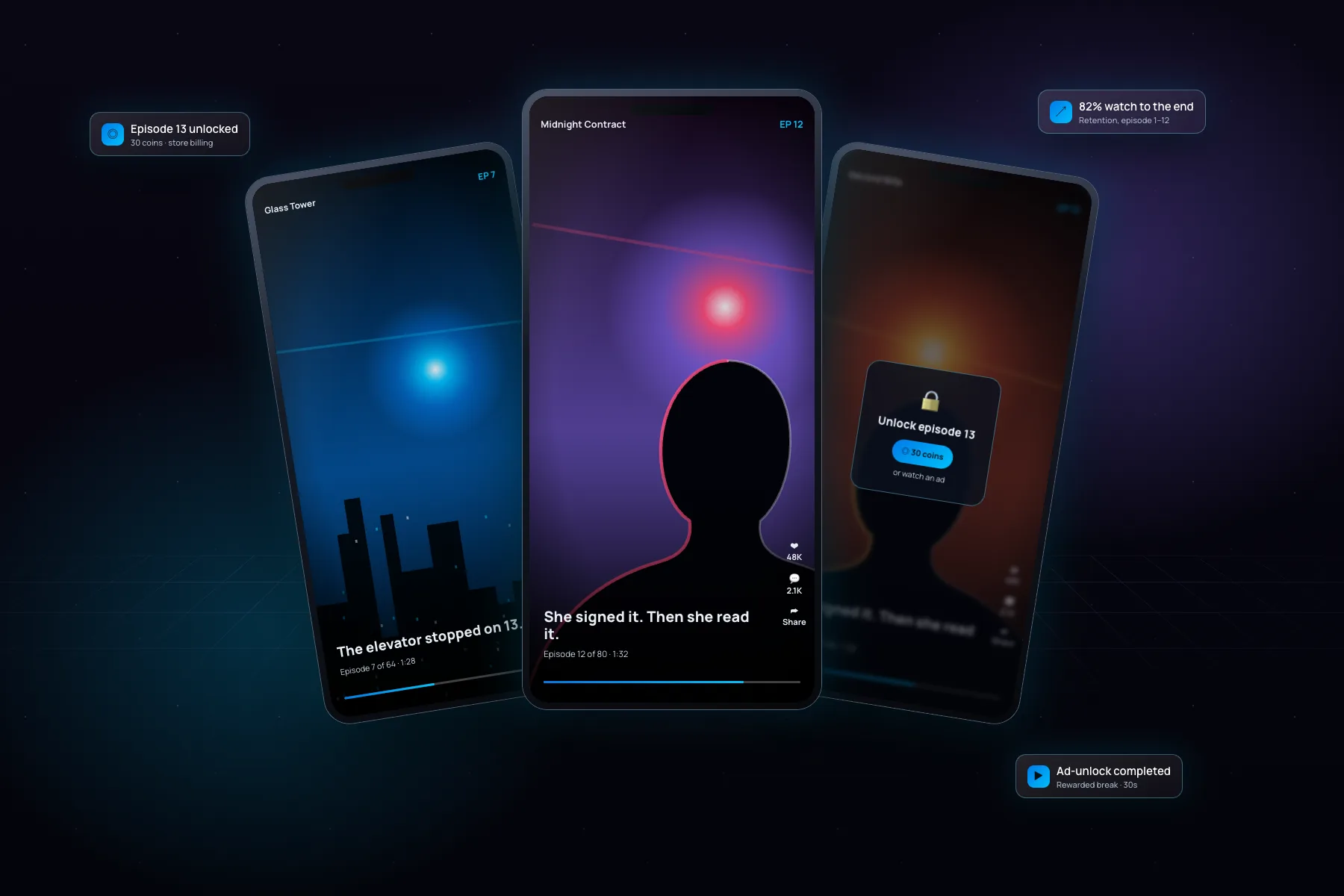
- Subscription — recurring access to everything, or to a tier of it. Predictable, and it rewards depth of catalog.
- Advertising — free to the viewer, funded by breaks. The widest possible reach, and the only model that earns anything from people who will never pay.
- Pay-per-view — an individual title or event, priced on its own. Suits things with a moment: a premiere, a final, a one-off.
- Free — no revenue, on purpose. Trailers, first episodes, and anything whose job is to get somebody into the catalog.
Free guide
OTT Platform Growth & Monetization Guide
The benchmarks, formulas and ROI scenarios behind a profitable streaming platform. Thirty slides, free.
Why one model for everything is expensive
A pure subscription service earns nothing from the large majority of people who arrive, watch one thing and leave. A pure advertising service earns very little from the small minority who would happily have paid for depth. A pay-per-view-only catalog has no reason for anybody to return between events.
These are not hypotheticals about market share; they are arithmetic about the same audience. The visitor who bounces off a paywall is worth something to an ad break and nothing to a subscription.
Where it gets decided
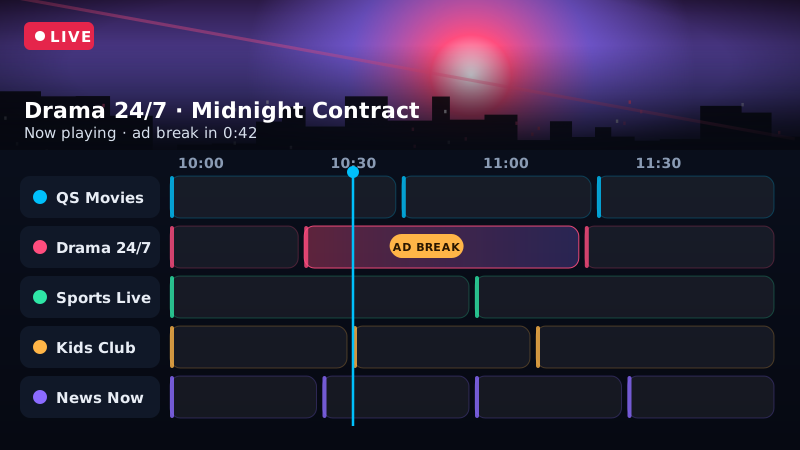
The useful question is not “what kind of service are we” but “what is the right answer for this title, in this territory, this month”. A premiere might be pay-per-view for two weeks, then part of the subscription tier, then ad-supported a year later when it has stopped being new. The same title can be free in a market you are trying to enter and paid in one where you are established.
What that requires of the platform
Not much, if it was built for it — and a rebuild, if it was not. Entitlement has to be evaluated per asset rather than per account: this viewer, this title, this territory, right now. Prices and windows have to be data that an editor can change, not configuration a developer deploys. And the reporting has to be able to answer which model earned what, or the decisions are guesses.
Most services that run only one model are not doing so because they decided to. They are doing so because the system they bought only does one.