





“White-label” is used loosely in this market. It can mean anything from a logo on a row inside somebody else’s app to a complete set of apps published under your own name. The difference rarely shows up in a demo. It shows up in the app store, and in who your viewers think they signed up with.
A channel inside somebody else’s app
The quickest option is to appear as a section within an app another company publishes. Your content is there and your logo is on the row, but the viewer downloads an app with someone else’s name on it, and signs up with them rather than with you.
It is a reasonable way to test demand. It is not a brand, and the audience you build there is on loan.
Free guide
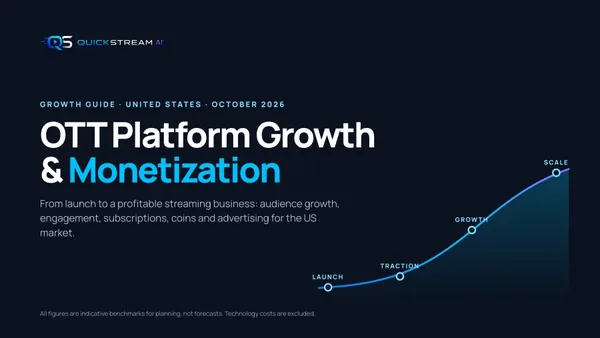
OTT Platform Growth & Monetization Guide
The benchmarks, formulas and ROI scenarios behind a profitable streaming platform. Thirty slides, free.
A branded app published by the vendor
The middle option looks much better. The app carries your artwork and your colors, and it is visually indistinguishable from something you built.
The tell is in the store listing. Open the app’s page and look at the developer name. If it shows the vendor rather than you, then the store account, the reviews and the in-app purchase setup sit with them. Your brand is on the icon, but not on the listing.
White-label apps under your own developer accounts
The arrangement worth holding out for is white-label apps published under your own Apple, Google, Roku, Samsung, LG and Amazon developer accounts. The store listing carries your name because the account is yours. Viewers download your app, subscribe through your storefront and see your brand from the icon to the end credits.
It takes a little longer to set up: developer accounts have to be registered and verified, and someone has to own that process. It is worth the extra couple of weeks, because it is the difference between renting a shelf and opening your own store.
Three questions worth asking any platform
- Whose name appears as the developer on the store listing?
- Does every screen my viewers see carry my brand?
- Who handles store submissions, reviews and rejections — and is that included?
A platform that genuinely delivers white-label apps will answer all three without hesitating. Get the answers in writing; they decide what your viewers actually see.